Showing posts with label chickens. Show all posts

Friday, June 20, 2014

Reflections on the Slaughter of a Favorite Hen

Yesterday we said goodbye to Ruby, our Rhode Island Red hen. She's an old bird with a lot of personality and has always been our favorite hen: independent, feisty, plucky, the boss lady of the flock. From the moment we got our first chickens about two and a half years ago, we knew this day would come. Chickens don't consistently lay forever; once they hit a certain age they go through a kind of menopause and don't produce eggs as regularly. We were able to sell our younger hens, but Ruby is a year older than them and no one wanted to purchase her. We knew what that meant we had to do.

Josh handled the processing while I puttered around the kitchen trying to avoid an emotional breakdown by not thinking about what was about to happen, but I glanced out the window just as Josh walked through the backyard, gently carrying Ruby in his arms to the slaughter location. I know death is quick with a sharp scalpel, over in a matter of seconds, almost painless to the chicken, but I dissolved into tears when I saw our perky feisty bird going quietly to her death.

Possibly the hardest part of farming with livestock is getting to know the creatures you will eventually be eating. Maybe it's easier on a large commercial farm, but here we've got so few animals and interact with each so regularly that we get to see personalities and quirks of each animal. There is no emotional distance when you feed, hold, and care for an animal daily. Your heart becomes entangled with theirs as their wellbeing is so important to your own. When our animals suffer, we suffer. When they are content and healthy, we are happy. We laugh at their antics and rejoice in their good health. We are privileged to care for them and live side by side with them.


I am grateful for the life we've given Ruby and all our hens, a natural life filled with roaming the pasture foraging for clover and insects, taking dust baths, resting in the shade during the heat of the day, and coming back to roost in the coop at dusk. Yet as I rejoice in the life we're blessed to give our livestock, I am also reminded that it is a privilege for us to be able to give our animals a last parting gift in the slaughter process. When we intentionally end the life of one of our animals we do all we can to ensure that death comes swiftly, quietly, painlessly, and without fear or stress. This is more than can be said for death in commercial slaughterhouses, places filled with the smell of blood, an undercurrent of fear, loud noises, terrified animals. Whether in a commercial slaughterhouse or here on our small farm, death is never easy or pretty, yet I do believe it can be handled with dignity and in a way that honors the animal that is being killed.

I've been eating more meat outside our home since getting pregnant, excusing my choice by telling myself I need more protein. That excuse seems flimsy when I think of all I know about factory farming and the processing that occurs in commercial slaughterhouses. I feel there is an emotional toll taken every time I consume meat that has not been raised with the animal's wellbeing in mind. I can never eat that meat with a clear conscience; it is always haunting me even as I attempt to smother my moral qualms.

I've written impassioned views on wanting all of mankind to see the suffering of factory farmed animals and rise up in arms about it, but what I'm seeing so clearly now is how much it harms me personally to be complicit in the factory farming system. The only time my passion wavers is when I crave a specific food item and choose to ignore my morals in order to satiate my craving. Every time I do that I am indulging in my senses rather than in my morals and it chips away at something in my soul.

When I consume factory-raised farm animals I purposefully ignore their suffering and it makes it that much easier to ignore, justify, or turn away from any kind of suffering in the world. I don't want my soul to become calloused in that way. The life of a chicken may seem insignificant in the face of all the human suffering that is in the world, but if my heart is calloused rather than tender than I cannot respond appropriately when I see human suffering.

It is said that sociopathic individuals first show their lack of empathy through cruelty towards animals, which often later progresses into harming humans. Engaging in cruelty, whether explicit or complicit, has its consequences on the heart and soul.

As I wrestle with the issue of us slaughtering our livestock and what that means to me emotionally and morally, I see that my grief over the loss of a hen is both healthy and morally necessary, a vital reminder of the importance of each life. It will never be easy to slaughter an animal we have cared for and I believe that is how it should be.  Life, whether human or animal, is not meant to be meaningless. Life is precious no matter what creature it inhabits. It is a force to be honored and respected.

Sometimes in this farm business I find myself wishing I could be more numb, to care less about my animals. Yet Jonathan Safran Foer writes, "You cannot protect yourself from sadness without protecting yourself from happiness." And it is true, the sadness of animal slaughter is tempered with a great sense of fulfillment and even joy. Caring for livestock is a wonderful privilege and one we take pride in.

Today as I mourn the death of a hen that I loved, I'm reminded of how I want to live and eat. I want to consume food with my emotions fully engaged and my brain active and aware. I want to be able to truly enjoy what I eat and that means eating knowledgeably rather than in chosen ignorance. I've found there is something different about eating food that is produced here on our farm. All my emotions and senses are fully engaged when I eat a hearty meal of lamb chops from our own lambs, when I eat chicken and dumplings from our own chickens, when I eat mashed potatoes and sautéed green beans from our own garden. I feel a joy and pleasure that goes deeper than my tastebuds. I'm satiated both sensorily and soulfully. I can rejoice in the sweat and tears that has gone into the meal.

I want my soul to be enriched when I eat, to be made larger rather than depleted by my culinary choices. I am grateful to Ruby for the life-force she has given for us and for the privilege of getting to care for her. I am grateful to be reminded that life is precious and meant to be honored and that I have the great privilege to do so every time I choose what I will eat.

Wednesday, March 19, 2014

Backyard Chicken 101


It's that time of year again! CHICKEN TIME!

You can actually order chicks at any time of year, but right now is when Tractor Supply stores and farmers co-ops and feed and seeds have hundreds of adorable peeping day-old chicks for sale.

A friend recently asked for advice on raising backyard chickens and I wanted to share a bit of what we've learned in the last two years of chicken ownership. Let me say right off the bat that there are hundreds of backyard chicken tutorials online. My advice is nothing fancy or especially comprehensive. These are just my top advice points when I'm asked about having chickens.


 1. Chickens are messy and will destroy your yard. 

There's really no way around this. Chickens produce copious amounts of poop. And chicken poop is gross. It is stinky. And yes, it is fertilizer and all that, but still. Stinky.

We utilize the "chicken tractor" method but this method has drawbacks. The first of which is getting a coop that is easily mobilized (ours honestly takes a little grunt work to move, so we move it about once weekly). The second of which is making sure you have the space to use this method effectively. Chickens will tear up everything they can get to. Our five hens have a 6x4 coop and are allowed to free range most days and by the end of the week that their coop has been in the same spot there is nothing but bare dirt and piles of poop left over. Moving our coop around is fine here on the homestead because we have a two-acre pasture to use, so having some bare spots isn't a big deal. If we had a regular sized yard I think I'd reconsider moving the coop around because the yard would be completely destroyed in very little time.

Personally think the best option for a backyard coop is one that is immobile, with cleanliness achieved through using the deep bedding method: keeping a bale of straw handy and using it to cover the ground of the coop / chicken run weekly or as the top layer of straw gets dirty, then doing a deep clean and hauling all the straw out to the compost pile every month or so.


 2. Predators of chickens are abundant and clever.

Raccoons, opossums, coyotes, stray dogs, stray cats, hawks, foxes, weasels, skunks. All these animals love a tasty chicken dinner and some will go to great lengths to get it. Most of these predators are not strictly limited to living in the country. I actually think there tend to be more chicken predators in urban areas than in the country.

In our two years we've lost a chick to our own dog, a hen to a stray dog, and a hen to an unknown predator, probably a possum. All but the first loss were due to lack of security with our coop. In both cases our coop was resting on uneven ground (which we didn't realize) and the predator scooted under and had their way with the hen.

Coops need to be on level ground and be well-reinforced. Just chicken wire may not cut it -- a stray dog or even a determined raccoon can tear through chicken wire. Our coop is reinforced with hardware wire plus chicken wire.

Here's some more great information on preventing loss from predators, with specific information on deterring different types of predators.


3. Hens don't lay forever. 

The hard fact is that a hen will not lay consistently forever. Hens' production gradually drops and each year after the first year they will molt, a period of up to four months where they lose then regrow feathers, during which time they will not lay a single egg but will still eat as much as before. Either plan to have a mostly non-functional animal after a few years (in other words, a pet) or know what you are going to do when your beloved laying hen stops, well, laying.

You can either slaughter and eat your chickens yourself once they're past their prime (stew hen is delicious in dishes such as chicken & dumplings) or it would be easy to find someone else who can do dirty job for you. We took in some roosters a few months ago from folks who knew they'd be slaughtered, but didn't want to eat the birds themselves.

Our plan is to phase out hens at around three years of age, so this year we're getting new chicks to grow up to replace our current hens who are just turning two.


 4. Count the cost.

Folks often dream of raising hens with the benefit of "free" eggs. This is a little bit of a myth, in my experience. Backyard chickens don't necessarily equal massive savings. In fact, your home-raised eggs will likely cost at least as much as standard grocery store eggs (around $2/dozen these days I think?) and may be closer to the cost of farmers market eggs ($4-$5/dozen).

Some of the costs that should be factored into the "price" of your hens' eggs: 

Coop: $50-$300 (or more, like these crazy chicken mansions)
Chicks: $3-5/each
Feeding chicks/pullets until laying age: $10/hen
Waterer: $10-40
Feeder: $5-40
Heat lamp: $10-25

Our total startup cost, including feeding the chicks/pullets until they reached laying age, was about $200 which is actually on the low end of the scale. We only spent $50 on our coop, so that was a major part of our savings. It still takes a lot of eggs to make up that startup cost.

Every month our five hens go through a 45 lb bag of organic feed (which we purchase from Windy Acres in middle-Tennessee, though we are transitioning to our own whole grain feed soon) that costs $25. They lay about 10 dozen eggs a month when they're at the top of their game, so each dozen breaks down to about $2.50 when only factoring feed cost.


With all these things said, we get a lot of enjoyment from having chickens. Their fresh eggs are delicious and usually plentiful. The hens all have funny personalities and are amusing to watch as they roam around taking dust baths and scratching around for bugs. Once the initial work of setting up for chickens is over, they don't take a whole lot of work. We probably spend about 5 minutes a day taking care of the hens -- feeding them, giving them water, and letting them in and out of their coop to free-range during the day.


Thursday, February 7, 2013

Incredible: Egg Storage


Oh my. Our girls ALL started laying just last week and we are pretty darn excited. Especially because we worried that Ruby, our Rhode Island Red who we bought as an already fully grown hen, might be older than what her previous owners claimed (a year old) and might have her egg-laying years behind her (in which case she'd be headed to the stew pot). Since we've got six hens (Ruby, two Buff Orpingtons who are collectively called "Allie" and three Barred Rocks who are collectively called "Alice") that means we are getting half a dozen eggs PER DAY.

Maybe that doesn't sound a lot, but we don't usually eat eggs for breakfast (even if we did, we wouldn't eat six in one sitting). Maggie recently developed an egg allergy so she can't eat anything that has lots of eggs in it. She can still eat baked goods, but nothing that's egg-heavy. Homemade ice cream is out, pasta carbonara is out, French toast is out. Sadface.

So we've been swimming in eggs lately. It's pretty awesome, but we are excited to get to sell some. We won't make a profit even starting the price at $4 a dozen, but the hens eat about $30 worth of feed every month so if we can offset that cost a little that would be awesome! If you're in the Huntsville area, let us know if you'd like some on a regular basis. I'll also be taking eggs with me on my occasional (usually every other month) trip to Nashville!

I was reading about egg storage today because I've been curious about the refrigerated vs. countertop debate and a few people have asked about our countertop storage. I've felt perfectly comfortable keeping our eggs on the kitchen counter. Our eggs are of course super-fresh and we use them up within a couple weeks at the most.


I wouldn't recommend keeping grocery store eggs (even though they are generally pasteurized and thus "germ free") on the counter because when you buy them they are already not as fresh. They can be up to 60 days old before they are removed from store shelves.

 Refrigeration can help keep eggs fresh for longer (up to seven months, if necessary), but eggshells are permeable and can absorb odors from other foods in your fridge. This is another reason I don't put our eggs in the freezer... because really, sometimes my fridge gets that funky smell before I figure out what has gone bad. I don't always stay on top of my leftovers, folks.

I've found that room temperature eggs seem to cook better - and today I researched and found the reason why. Eggs incorporate into batter more easily and also are easier to whip if they are at room temperature. Now, it is possible to just set an egg out on the counter an hour or so before beginning a recipe, however fluctuations in temperatures can cause a cold egg to "sweat," which can facilitate the growth of bacteria.

Oh! One more thing that I had no idea about until today. It's best to store eggs with the large end up (which is the way they are generally packaged at the store) to keep them fresh for longer.

I hope you already know the difference between cage free eggs, free range eggs, and pastured eggs (if you're unsure, let me know and I'll write a post going into detail about it because labeling is tricky and sneaky) and know that pastured is what you want for ultimate health for yourself and kindness towards the animals who produce those yummy foods that we love. Go get yourself some farm fresh eggs, now! And you can keep them on the counter without fear.


You may, however, become terrified of this picture of Maggie holding one of the Allie chickens. Just look at that little grimace-grin. Girl don't play around when it comes to chickens.


ADDENDUM:

I completely forgot to write about this, since by now it is just second-nature to us. We do not wash our eggs until right before we are about to use them. Eggshells are covered with tiny pores. When eggs are laid they have a natural protective coating called "bloom" that keeps these pores sealed up. Washing removes that bloom and makes the eggs vulnerable to bacterial contamination. This, again, is only important when you buy farm-fresh eggs. Grocery store eggs have already been washed, heavily sanitized, and pasteurized.

Sometimes our eggs are pretty dirty so we do rinse them off with warm water a couple minutes before we are going to use them. I'm not great at cracking eggs cleanly so the inside egg usually touches the eggshell before it gets cooked and the rinsing just makes me feel a little better about cleanliness. We may begin amending even that practice and just gently scrubbing them with a dry sponge or sandpaper.


Saturday, September 1, 2012

The Littlest of Kittens

A couple days ago I found a teeny tiny baby kitty wandering in the street. Yesterday I took him to the vet and he got treated for ear mites, fleas, worms, and infected eyes. Poor little baby. Today I bathed him. He is looking more and more like a healthy kitten by the day, though he is still woefully malnourished with plenty of ribs sticking out everywhere. Adorable nonetheless. Even when he looks like a drowned rat.

The plan was to give him to a shelter, but since all of them are filled up right now and Animal Services euthanizes kittens that weigh less than 2 lb (Little Bit weighs in at 1 lb!), we are stuck with a kitten for now. His cuteness and cuddliness is slowly wearing down our resolve to not have another cat.


See?


We are tossing around names right now. Some ideas: Octavius, Gaius, but really anything that carries on the Rome-inspired cat name trend or the great ancient ruler name trend. My other cat is Caesar. I've also had cats named Cleopatra and Alexander the Great. Any other good ideas?

Friday, August 31, 2012

Transformation

I've been attempting to whip a lot of things into shape around here lately. Maggie's room got a nice cleaning, thanks to a new cube organizer. That plus a guest room overhaul contributed to about 7 large boxes going out the door to the thrift store. It feels so good.

I've been trying to get back into the garden game again as well, and there has been some progress.

Proof? Well, we have gone from this...


...to this!


Okay, maybe still preeeetty far from perfection. 
But look! You can see a square foot of dirt!


Our Big Red Hens, Ruby and Rouge, are the ones that should receive any praise for being able to see ANY soil unobscured by weeds weeds and more weeds. They have done a pretty great job of tearing things up. They have a harder time with the taller weeds, but still do some damage. Once they've scratched things up for a couple days, we move them and hoe out the roots and stray plants that survived the chicken apocalypse. I have a solitary squash plants growing so far in a post-chicken area and plan to hoe and plant some more seeds this weekend (confession: I actually typed most of this post up LAST Friday, then promptly did zero garden work last weekend).


I'm not sure how things are going to go with planting things immediately after the chickens. See, chicken poop is very high in nitrogen and can burn plants if it hasn't been composted or at least left to break down for awhile. But my theory is that it'll be ok since the chickens have only been in each spot a few days. There isn't a blanket of poop covering the entire ground, more like poop land mines every once in awhile. 

Sorry for the ick. But honestly, chickens are kind of gross and stinky and poopy creatures. Can I get an amen from any fellow chicken keepers?


At least they have good personalities.

Thursday, August 23, 2012

Chicken Emergency: Egg Binding and Calcium Deficiency

We recently had a traumatic chicken emergency wherein Rouge, one of our year-old Rhode Island Red hens, became egg-bound. This is when a hen has an egg stuck inside her. Not a fun time for her or for her owners. Thankfully, I had (for some reason, really no idea why) recently read about egg-binding and was able to identify the symptoms in her and treat them accordingly.

I write this to you, possible chicken owners or future chicken owners, to know how to treat egg-binding. Egg binding is a serious problem because it can cause infection and can cause everything to "back up" in a hen's digestive system, since in a chicken everything comes out of the same hole - poop, pee, and eggs.

So here it is. Maybe knowing this in advance will help you prevent or at least identify if you ever have a hen in this predicament!


Egg Bound Hen Identification


1. Refusal to walk or even lay down properly. This is what first tipped us off to Rouge having issues.

2. "Pumping" her vent. This is the hen's "hole." It usually flexes when you first look at it, then doesn't move. Rouge was pumping hers like she was trying to get something out.

3. Sometimes you can feel for the egg by gently squeezing either side of the vent. We couldn't feel anything in Rouge, though.


Egg Bound Hen Treatment

(what we did that seems to have worked, fingers crossed)

1. Gave her a "bath" in warm water for about 30 minutes. When she got out, she finally wanted to stand up and let out a big poop. Poop is a good thing. It means the system is working and not stopped up.

2. Isolated her. We kept her in a dog crate in the garage with food and water.

3. Gave her fish oil. To lube up her system.

4. Gave her liquid vitamins. This can be good for any type of chicken illness, just as an extra boost to their body. We bought a children's liquid vitamin, Poly-vi-sol, from the drugstore. We administered both this and the fish oil with a dropper.

5. Gave her calcium supplements. We got soft gel calcium tablets from the drugstore, cut them open, and put the inside goop on watermelon (which she loves). This was two days in, she was acting more like herself, and gobbled it up.


What We Did Not Do

1. Take her to the vet. Too expensive. She is livestock, not a pet.

2. Stick a finger inside her. Some people on the internet recommend this as a way of feeling if there is an egg stuck. Some people even advise doing this in an attempt get the egg out. TERRIBLE IDEA. If there is a membrane-only egg inside, your finger will pop it and infection will ensue. Leave your poor hen's hole alone.

Prevention

After she had gotten sick, I realized something: I should have seen this coming. I knew Rouge was having problems with calcium deficiency. The very first egg she laid for us had a broken shell and every egg after that was very thin-shelled. The exterior of her shells had a chalky residue on them. You can tell in the picture below which eggs are Rouge's and which were laid by our other hen, Ruby.


The majority of a chicken's shell is made up of calcium. When a chicken is calcium-deficient, her body will pull calcium from her organs to try to compensate. The problem with this is that:

1. Shells will be thin or non-existent, causing cracking or breaking.
2. The hen has a hard time pushing out soft-shelled eggs, as there is little resistance to push against.
3. Egg binding can occur when the hen is unable to push out the egg.

Looking back, I wish I had realized the calcium deficiency was such a big deal. We had given them oyster shells, which apparently are adequate supplement for many hens but not for ones who are severely deficient. 

For now, Rouge seems to be doing well. She has only laid one egg, with a broken shell, since the egg-binding incident two weeks ago. I am hoping that her body is just recovering and that she can rebuild her calcium stores with the softgel supplements we are giving her. I had gotten spoiled with the two eggs a day we were getting for awhile!

Sunday, August 12, 2012

Backyard Chickens: The Tough Part - Sick Chicks

Having chickens is so much fun. It is so rewarding. There is nothing better than eating an egg from a hen you have cared for yourself. But the reality is that chickens are not very tough. They get sick relatively easily. They are at the very bottom of the food chain. They have many, many predators - dogs, cats, raccoons, opossoms, coyotes, weasels, hawks, owls. Most wild carnivores or omnivores enjoy a good meal of chicken.

In going into chicken ownership, I have tried to mentally prepare myself for the inevitable. I have so many friends with chickens and every single one of them has lost at least one member of their flock. Absolutely no exceptions to that hard rule.

Losing an animal you have cared for is never easy. Death is never easy, however it comes.

In our several months of chicken ownership, we've now lost two chicks. One got chomped by Batman, who was off his leash while the chicks were loose. The chick died instantly, but it was in front of Maggie. She bawled. I bawled. It was a sad day.

Then yesterday we lost a Silkie chick to some kind of infection. I made the poor choice of getting the Silkies from a lady out in the country who raises them. Now, I have nothing against folks who raise and sell chicks on a small scale but this lady's place was not well-kept. Too many chickens in too small a space. A pack of cattle hound type dogs roamed around the yard and assaulted the car when we pulled in the driveway. They were beyond bedraggled, they were mangy and possibly disease-ridden. The situation put me in such a panic, as I was scared to even put Maggie on the ground amidst the crazy-looking dogs, that I accepted the chicks the lady grabbed out of the bunch.

Once we got in the car I was able to examine the three chicks more closely and noticed that the small white one didn't look so great. She was not standing up all the way or straightening her legs and was less active than the other two. If I had been smart, I would have gotten out of the car and demanded an exchange, but at that point the crazed dogs were circling and BITING MY CAR and uttering unearthly yelps... so I just drove home, cautioning Maggie that the sickly chick might not make it very long. It took a month for it to happen, but that was the chick that died.

Now, sadly, it seems that her friend, the small black Silkie, has the same illness. She is hunched up, eyes closed, some discharge on her beak and around her eyes. I scoured the internet and came up with suggestions that it is likely a bacterial infection and can be treated with antibiotics. Fingers crossed that I can find the right medication at the feed & seed and that it will be effective.

Farming is a learning process. Sometimes that is fun, sometimes it isn't. Right now, this isn't very fun. But I do know what I did wrong and that is a bright spot in the dead chick situation.

The big mistake I made was in buying from a non-certified disease-free flock. Major hatcheries will certify their chickens as disease-free. Since chickens are so susceptible to disease it is hugely important to make sure nothing is spread around; an illness can decimate an entire flock within days. The other chicks we bought were all from Cox Family Market, folks near Josh's dad's house that raise chicks of all shapes and sizes. All their chicks and chickens are disease-free guaranteed. On top of that, they are a family business and their farm is well-maintained with all the livestock in healthy living quarters.

Please don't make the mistake we did, if you're thinking of getting chickens! Make sure you are buying from someone who can certify their flock as disease-free. If you do buy from a small breeder, make sure the chicks' environment has been clean and looks well-maintained. If I had been conscientious about picking out these chicks, we could have avoided this sad situation.

RIP little white Silkie chick. You've taught me an important lesson.
And little black Silkie, please hold on and fight for your life.


Wednesday, August 1, 2012

Silkies


A few weeks ago I drove Maggie out into the countryside - even more country than where we live! - to get her a few Silkie chicks for an early birthday present. We braved a scary pack of cattle dogs (I was kind of afraid to put Maggie down amongst them) who BIT MY CAR as I was pulling out of the driveway, but it has been worth it to have these adorable little fluff balls as part of our ever-expanding farm livestock repertoire.

Maggie has wanted a Silkie ever since meeting our friend Flo's white Silkie, Popcorn, named by her daughters Amelie and Sera (they also have a chicken named Cup).

When getting chickens, we realized that if we want to actually have the goal of being somewhat self-sustainable that it would not be sustainable to consider all our chickens as pets. Chickens have a limited amount of time where they will lay eggs and then they go through "hen-opause" and are pretty much spent. Some folks have a hard time saying goodbye to their hens who have faithfully produced eggs. I am sure we will have a hard time too, when the time comes, but we know it just isn't practical to have unproductive chickens taking up the space that should be used by productive ones.

With that being said, we knew it would be tough for Mags to say goodbye (and possibly eat) birds that have been her friends. Silkies are a show breed that doesn't lay any eggs, so they're an easy choice for our "pet" chickens. These girls will never be eaten!

Speaking of "girls," we actually don't know if these little ones are... but our fingers are crossed! I personally would not mind ending up with a breeding pair, but really I'll be happy if there is just one gal out of the bunch.


One of my favorite things about chicks is the gawky, awkward phase they go through between being fluffy and getting their real feathers. An extra bonus of having Silkies is they get the most amazing little bellbottoms -- right now it looks like the little chicks are rocking some serious legwarmers.


This little lady is a few weeks older than the other two. 
She's been a great "mother" for them and is wayyyy more fluffy already.


Tuesday, July 24, 2012

Bacon, Brie, and Lambsquarter Frittata

Last week we had an overabundance of eggs, due to the fact that I had purchased some from Earth Fare the week before that never got used, then Ruby and Rouge started laying, then I forgot that they started laying and bought another dozen eggs at the farmers market. So we had 2 dozen plus 2 eggs (26 total, I suppose), all dressed up with nowhere to go. 

We also had some brie languishing in the fridge (because somehow I'm tired of brie right now?!) and the hugest lambsquarter bush thing (ok, actually like 5 of them) in the front garden. The perfect time for a frittata, which is the best method for getting rid of fridge remnants.

If you prefer something with a crust, make this into a quiche instead! I think this dish would be perfect for just about any meal, particularly brunch, but we had it for dinner with a side salad and homemade whole wheat rolls (the ones that almost caused me to burn the house down).


Bacon, Brie, and Lambsquarter Frittata

2 slices bacon
8 eggs (pastured or free range)
Handful lambsquarter or fresh spinach
1/4 round of Brie (about 2 oz)
Splash of milk, half and half, or cream
Salt and pepper

Preheat oven to 375.

Fry two slices of thick-cut bacon. Crumble bacon into pieces. 

Beat eggs and add milk or cream and a bit of salt and pepper. Mix together eggs, bacon, brie, and lambsquarter in the pan and cook on medium for 4-5 minutes or until the egg mixture begins to set. 

Broil in oven for 3-4 minutes or until the frittata has set. Enjoy!


Monday, July 23, 2012

Curry Fried Egg and Toast with Honeyed Goat Cheese

After over a month of waiting, we got our first beautiful, pale pinky-brown egg. I have a story about the outer condition of the egg but that is a story for another day when I won't be writing about eggy food things. 

 By the way, this eggy food thing is delicious. So delicious that when I first discovered it I had to have it daily, sometimes twice daily, sometimes at 1 a.m., causing friends to speculate that I was pregnant (not yet!).


 I was inspired by this post about Curry Fried Eggs on my friend Miranda's wonderful food blog. She no longer blogs much, but has some amazing posts and tasty recipes.


This is the most perfectly complete breakfast imaginable. The tang of the goat cheese offsets the heartiness of the eggs, a hint of sweetness comes through with the jam (or honey), and Ezekiel toast is the perfect nutty foil to it all. Did that sound properly foodie-ish? I'm just trying to give this amazing dish the laud it deserves.

 Curry Fried Egg and Toast with Honeyed Goat Cheese

One egg, lovingly raised (free range / pastured will make all the difference)
Honey or fruit jam
Ezekiel bread 
Sea salt and fresh ground pepper
Curry powder 
Soft goat cheese (a basic chevre will work just fine)

Make a good old fashioned fried egg. I like to let the whites set, then "pop" the yolk so it will cook through, but if you like a runny yolk go for it. Before you flip the egg, dust the top with curry powder, salt, and pepper.

Meanwhile, toss a piece of Ezekiel bread in the toaster. When it is done, smear it with a generous amount of honey or fruit jam, then top with an equally generous amount of goat cheese. Slide the fried egg on top. Take a bite. Declare to your husband that this just might be as good as sex. Eat a second round against your better judgment. Be full and very happy.


Tuesday, July 10, 2012

Double Challenge // Week 4 Real Food Pledge // Cooking Black Beans from Scratch

We made it through this week of DOUBLE challenges! I won't say it was double fun. But we made it and that feels great. We did give ourselves one cheat meal (WINGSSSSS! and Dr. Pepper (me) / Sweet Tea (Josh))  but other than that, our meat consumption was limited to that leftover ground beef + a couple hot dogs from Earth Fare.

We even turned down seductively-scented barbeque meat at Josh's mom's house. Luckily she had plenty of good sides for us to chow down on - stuffed potatoes, corn on the cob, baked beans, squash casserole, and as many cupcakes as we could stuff in our face.


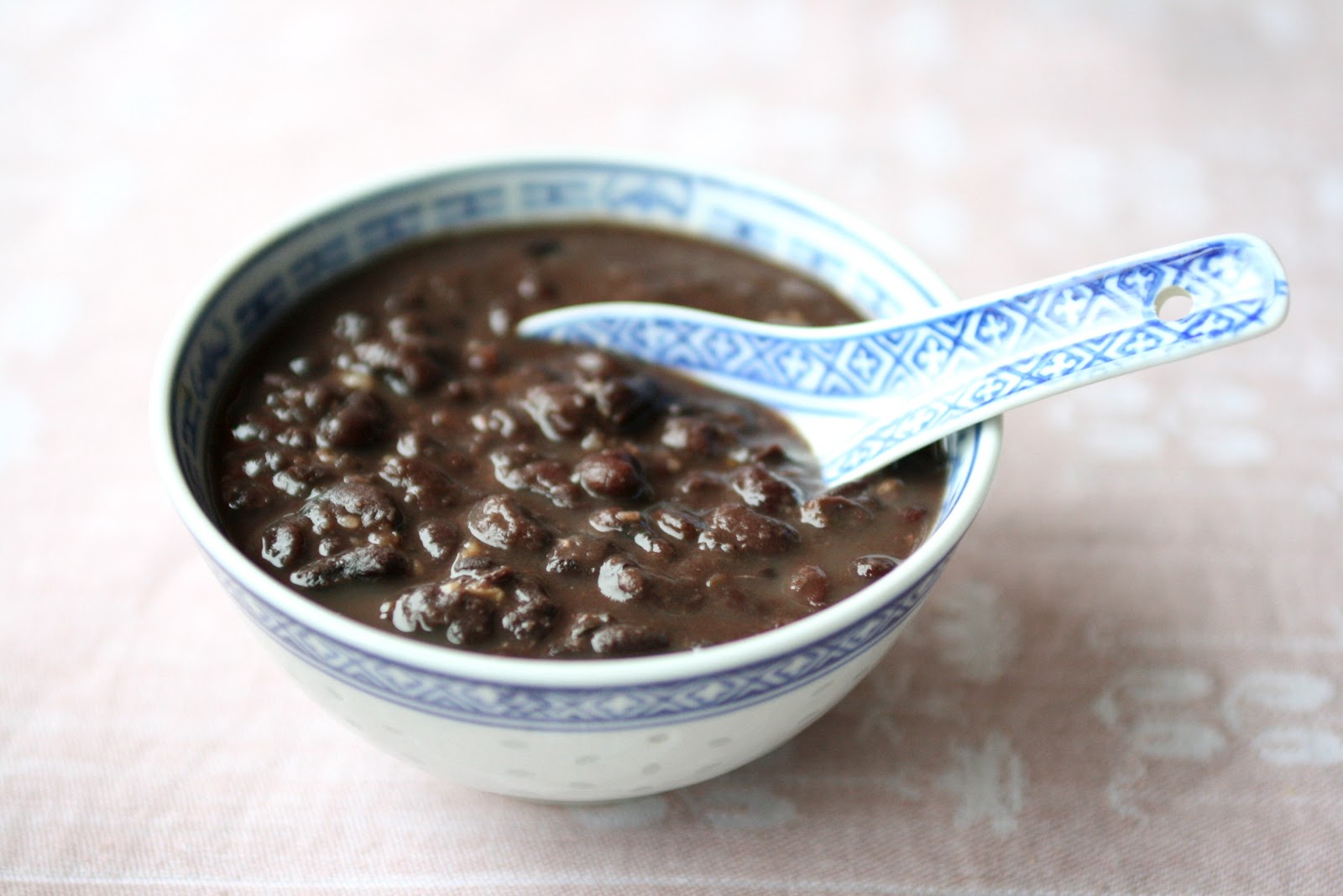
I felt extra kitchen-accomplished this week because I cooked my first batch of black beans from scratch! It took awhile, but the end result was so much cheaper (and I think healthier?) than buying canned. Have you ever tried cooking them from scratch? All you have to do is:

1. Soak beans overnight (2 cups of water per 1 cup of beans)

2. Drain and rinse

3. Cook beans in water (I started with 3 cups water per 1 cup beans and then added more water as they cooked down) and add in any flavorings you want (I added Mexican spice mix plus salt** and pepper)

4. Cook until tender (took 2 hours for me)


So simple! Why was I ever intimidated by this? My 1 cup of dried beans (which I think probably cost about $0.50 - they're about $2.50/lb in bulk) turned into about 4 cups of cooked beans - the equivalent of 2 cans of beans which would have cost $3 total just for the Earth Fare brand!

I think this method will work for just about any kind of dried beans you may find.

**Oops, I just read that it is best NOT to add salt to the cooking water - it prevents the beans from absorbing water and getting tender. That could be why I had to cook mine for so long! (it should have taken more like 1 hour to cook). So if you do this, make sure to only add salt AFTER they are already cooked.

Anyway, on to this week's challenge:

No fast food or deep fried food.

We can totally do this! Especially since we're getting stricter about our budget so I've already got some tasty things planned for us to eat at home, saving money from eating out.

We're also continuing with all the pledges from previous weeks, mostly. It definitely feels good to be reducing our meat consumption by a whole lot (I've got one meat dinner planned this week and four vegetarian dinners, yum).

This week we will be eating:

Dinners
Vegetable korma and homemade garlic naan (yesterday)
Roast carrots, parsnips // quinoa  // Roasted Chicken Leg Quarters
Earth Fare vegetarian pizza
Crispy potato & black bean soft tacos


Lunch
BBQ tofu over cheese grits (yesterday)
Dinner leftovers
Sandwich with cream cheese, sprouts, onion; tortilla chips; broccoli and hummus
Turkey rollup with garlic herb cheese

Breakfast (any combination of the following)
Frozen smoothies (blueberries, raspberries, vanilla protein powder, flax seed)
Gluten-free bagel with cream cheese
Apple and peanut butter
Sausage patties (Italian seasoned sausage from our 1/2 pastured pig!)


Wednesday, February 29, 2012

Chickens, y'all.


Moving day is Saturday! And though we had planned on waiting awhile on chickens, we got a steal of a deal on craigslist - chicken pen, brooder for chicks, and gravity feed waterer - and went ahead with it.

So with the chicken house came the most important question - what breed(s) to get? We would like to have both a small laying flock and to raise meat birds. While we could go the route of getting two breeds - one laying breed and one meat breed - we'd rather keep it small and simple with just one breed. We also knew we didn't want to go the industrial broiler route - the current standard meat breed is the Cornish Cross, a very sad breed that grows quickly but has many health issues due to its fast growth.


While talking to my friend Brittany, who has her own little backyard chicken setup, I was reminded of a chicken breed that I was very interested in a couple years back, way before I could actually
start my own flock. Dominiques are a great dual purpose breed and are one of America's first breeds. Early American colonists used these chickens for their eggs and for their meat. Several top breed benefits are:

-- Gentle and docile
-- Good mother
-- Good foragers - can "eat their living" from pasture
-- Good layers
-- Good meat, though smaller breasted than industrial chicken breeds

Plus they are just so darn pretty. They also have an interesting breed history, dating back to when America was just a British colony.

It also just so happens that a hatchery in middle Tennessee sells Dominique chicks, as well as many other rare and heritage breeds. Hopefully we can get set up to get some chicks in the next few months - the tentative plan is to raise a small batch (5-10) of meat birds and a small starter flock of laying hens. Plus maybe a rooster, so we can raise our own chicks!

And wouldn't you know it - the folks we bought our chicken equipment from have processing equipment and have generously offered to help when we are ready to process the meat birds. It's amazing how God provides when we aren't even looking for it. And the helpfulness of like-minded farmers really never fails to impress me.